
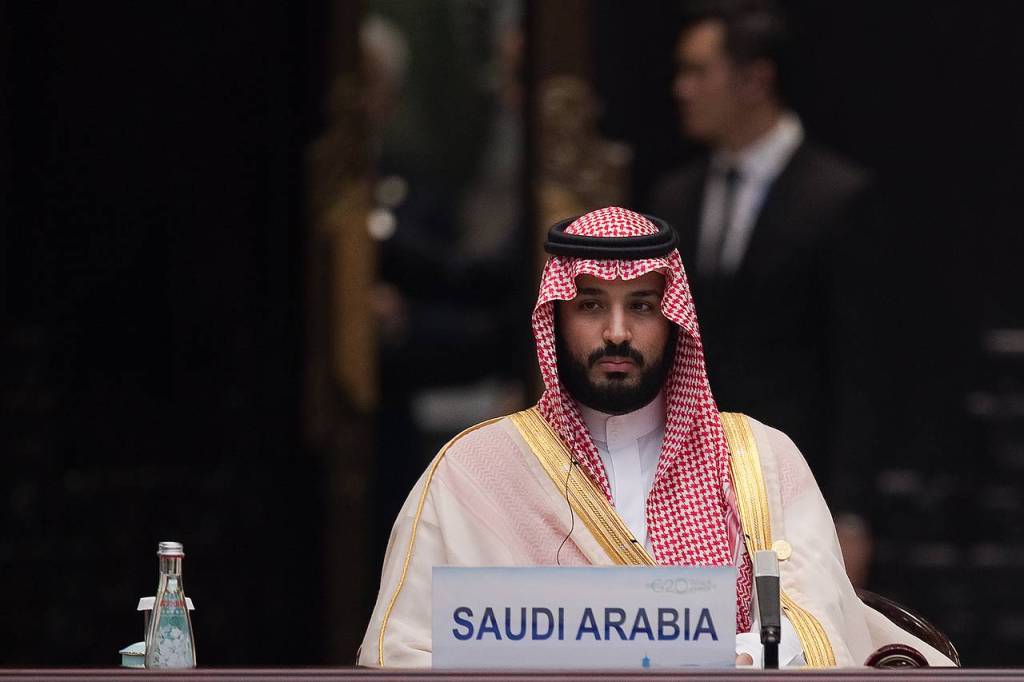
The Big Picture: As President Trump signals a preference for a weaker U.S. dollar, Saudi Arabia finds itself in a strategic “golden trap.” Because the Saudi Riyal (SAR) has been pegged at 3.75 to the USD since 1986, Riyadh doesn’t just use the dollar—it effectively is the dollar in the Middle East. When Washington chooses to devalue, Riyadh is forced to import that devaluation, regardless of its own economic needs.
Why it Matters: This is a cost-of-living and social contract crisis. A devaluing dollar acts as a hidden tax on the Kingdom’s non-oil growth and welfare. While oil revenues are nominal, the “Complexity” required for Vision 2030 and beyond—German turbines, Chinese solar panels, and Japanese robotics—becomes more expensive. This forces the government to choose between funding development or maintaining the social subsidies that ensure political stability.
1. Debt Stock: The Official Record
In Numbers: Saudi is taken on debt, not only to cover its operational spending and fiscal deficit, but also to cover investments under PIF and Aramco, which in principle should have a been pure revenue-generating ventures. Taken together, Saudi gearing is around 43% of GDP, standing around half a trillion dollars.
Saudi Arabia Total Debt Stock (2016–2025)
Outstanding Year-End Balance in USD Billions
| Year | MoF (Gov) (Local / Int’l) [1] | PIF (Total Debt) [2] | Aramco (Total Borrowings) [3] | Total Debt Stock |
| 2016 | $56.9 / $27.5 | – | – | **$84.4** |
| 2018 | $81.3 / $68.0 | $11.0 | – | **$160.3** |
| 2020 | $134.0 / $93.6 | $25.0 | $12.0 | **$264.6** |
| 2022 | $164.0 / $100.0 | $35.0 | $28.0 | **$327.0** |
| 2024 | $196.9 / $127.4 | $55.0 | $74.4 | **$453.7** |
| 2025 (H1) | $232.3 / $137.4 | $55.0 | $92.9 | $517.6 |
| 2025 (End) | $251.6 / $153.5 | $75.0 (Est) | $96.0 (Est) | $576.1 |
Source: NDMC, MOF, ARAMCO and PIF
2. The Devaluation Double-Edge: Upside vs. Downside
Saudi Arabia pays for the vast majority of its trade in USD, even with China (27% of imports). However, the “Scissor Effect” of devaluation creates a complex winner/loser dynamic:
- The Upside (The “Oil Bonus”): Because oil is priced in USD, if the dollar devalues, the Riyal value of an oil barrel remains the same at home. However, it can help the government’s budget if they spend those dollars on USD-denominated domestic labor. It also makes Saudi’s non-oil exports (chemicals and plastics) cheaper and more competitive for the rest of the world to buy.
- The Downside (The “Import Tax”): Saudi Arabia is a massive importer of “Complexity.” While 67% of imports are from non-US partners like China (27%), Germany, and Italy, the contracts are increasingly moving toward multi-currency baskets. A weaker USD means Saudi needs more dollars to pay for a German Siemens turbine or a Chinese BYD fleet, effectively inflating the cost for everyone by 10–15% overnight (assuming no further devaluation of the US Dolalr).
3. Local vs. International Debt: The Creditor’s Haircut
Riyadh splits its debt between Domestic Sukuk (Riyal) and International Bonds (USD).
- The Stealth Haircut: As the dollar devalues, the “real value” of the USD debt Riyadh owes to international creditors (like those holding $153.5B in MoF bonds) shrinks. While the nominal payment stays the same, the purchasing power of those dollars in the global market falls. Creditors are effectively losing value while Riyadh’s debt becomes “lighter” to carry in global terms.
- Domestic Stability: With $251.6B in local debt, the government is borrowing from its own banks and pensions. Devaluation erodes the real value of these local savings, putting pressure on the banking sector’s ability to fund private growth, as treasury, PIF, and Aramco suck liquidity out of the local market.
4. Political Stability and the “Welfare Squeeze”
The most critical impact is on the Saudi “street.”
- The Social Contract: Saudi Arabia imports nearly 80% of its food and consumer goods. A 10% drop in the USD makes a basket of groceries from Brazil or a car from Germany 10% more expensive. For a government that stakes its legitimacy on providing a high quality of life, this “imported inflation” threatens the domestic social contract.
- Local Businesses: Small businesses (SMEs) are the backbone of the non-oil economy. A devaluing dollar makes their machinery and raw material imports more expensive, crushing their margins just as they are pressured to raise wages for “Saudi-ization.”
5. NEOM vs. Wall Street: The Pivot to “Essentialism”
Riyadh is currently performing a fiscal “pivot.” It is scaling back domestic “Giga-projects” not because it’s out of money, but because the imported inflation of a weak dollar has made them too expensive to justify.
- The Logic: Riyadh has decided it is better to freeze a building in the desert (NEOM) than to default on its Foreign Investment Commitments (PIF’s stakes in US Tech and AI).
- Importing Policy: Because of the peg, when the US Fed cuts rates to devalue the dollar, the Saudi Central Bank (SAMA) must follow, even if Saudi Arabia needs higher rates to cool down local inflation. This is the definition of “importing U.S. monetary policy”—Riyadh loses its ability to steer its own ship.
6. “Importing US Monetary Policy”: The Practical Reality
What does this actually mean for the three pillars?
- For the Gov: SAMA (the Central Bank) cannot raise interest rates to fight local inflation if the US Fed is cutting rates to devalue the dollar. Riyadh is forced to “overheat” its economy to stay in sync with Washington.
- For Aramco: Their borrowing surged to $92.9B in June 2025. Devaluation makes their capital expenditure in non-US regions—like their massive expansion into Chinese chemicals—significantly more expensive, potentially slowing the energy transition.
- For PIF: The PIF is the “Global Firepower.” If the USD drops 10% against the Euro, PIF’s ability to buy European tech firms or sports leagues is instantly reduced. They are losing “buying power” on the world stage even if their bank balance looks the same.
The Bottom Line
Saudi Arabia is currently a “Dollar Proxy.” By importing US monetary policy, Riyadh gains the stability of the world’s reserve currency but loses the ability to fight its own inflation or protect its purchasing power during a US-led devaluation. The current scale-back of mega projects is the first visible sign that the “Dollar Handcuff” is starting to chafe.
Further Reading & Sources
- NDMC (2025): Government’s total outstanding direct indebtedness (external and domestic) as of December 2025 – Verification for MoF $251.6B local / $153.5B international split.
- S&P Global (Dec 2025): Saudi Arabia’s Public Investment Fund Assigned ‘A-1’ Short-Term Rating – Analysis of PIF’s $55B+ debt and liquidity.
- Aramco H1 2025 Results (Aug 2025): Interim Report and Gearing Analysis – Confirms gearing and debt surge to ~$93B.
- Amwal Al Ghad (Aug 2025): Aramco profit drops in Q2 ’25 amid ballooning debt – Context on $92.9B borrowing figure.
- KPMG Saudi Arabia: 2026 Fiscal Outlook and Project Re-scoping Analysis – Analysis of the “Fiscal Pivot” to social welfare.
 Cornellian Perspectives
Leave a comment