
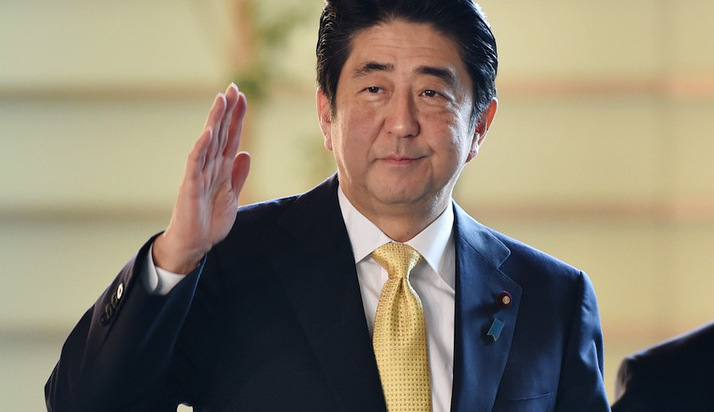
By essentially forcing Japan’s largest investor to give up on bonds and buy equities instead, Abe is hoping that it will spur other Japanese investors to do the same. He is also hoping that the bond buying he plans to do will be enough to push real interest rates below zero for an extended period of time, forcing even the most risk-averse Japanese investors to look elsewhere to park their cash. Abe also hopes those investors will either shift into Japanese equities or simply liquidate and buy up those Sony TVs that the once-mighty electronics retailer can’t seem to get foreigners to buy anymore.
Source: fortune.com
"By essentially forcing Japan’s largest investor to give up on bonds and buy equities instead, Abe is hoping that it will spur other Japanese investors to do the same. He is also hoping that the bond buying he plans to do will be enough to push real interest rates below zero for an extended period of time, forcing even the most risk-averse Japanese investors to look elsewhere to park their cash. Abe also hopes those investors will either shift into Japanese equities or simply liquidate and buy up those Sony TVs that the once-mighty electronics retailer can’t seem to get foreigners to buy anymore.
…
The Yen is not the world’s reserve currency, the U.S. dollar is. So there isn’t a huge international demand for Japan’s debt. The BOJ can’t print money indefinitely like the Fed and get away with it. Eventually, there will be consequences. Japan’s national debt of $11 trillion is nearly 240% of its GDP, the highest proportion of debt to GDP for any sovereign nation in the world by a wide margin. It has easily funded this debt load thanks to investments made by its massive pension funds, which the government is now cajoling to move its money elsewhere.
There is no telling how long the BOJ can keep funding the government’s debt without causing a real financial meltdown. The pendulum may swing quickly from fears of deflation to hyperinflation, which would undoubtedly upset Japan’s population, as their hard-earned savings would suddenly be worth nothing. Japan’s government would see their debt burden fall but would have to pay through the nose to service any future bond payments."
See on Scoop.it – Public-Private Duality, Economic Crisis, and New Financial Trends



 Cornellian Perspectives
Leave a comment